
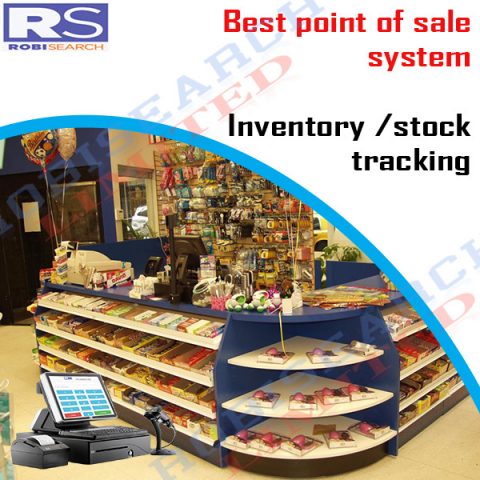
IMPORTANCE OF STOCK MANAGEMENT – Robisearch’s Stock control software is an application used by businesses of all sizes to manage their stock. Within a solution, you can view stock levels, items in, and remitted orders in one central system.
A good stock management software will enable you to integrate stock control with other aspects of your business, like sales, purchasing, and finances. This allows you to connect your staff, suppliers, and customers for a fully integrated experience.
Stock control methods
There are several methods for controlling stock, all intended to provide competent system for deciding what, when and how much to orders.
- Minimum stock level – you identify a minimum stock level, and re-order when stock reaches that level. This is known as the Re-order Level.
- Stock review – you have regular reviews of stock. At every review you place an order to return stocks to a predetermined level.
- Just In Time (JIT)– this aims to reduce costs by cutting stock to a minimum. Items are delivered when they are needed and used immediately. There is a risk of running out of stock, so you need to be confident that your suppliers can deliver on demand.
More examples:
- Re-order lead time– allows for the time between introduction an order and receiving it.
- Economic Order Quantity(EOQ) – a standard formula used to arrive at a balance between holding too much or too little stock. It’s quite a complex calculation, so you may find it easier to use stock control software.
- Batch control– managing the production of goods in batches. You need to make sure that you have the right number of components to cover your needs until the next batch.
- First in, first out– a system to ensure that perishable stock is used efficiently so that it doesn’t deteriorate. Stock is identified by date received and moves on through each stage of production in strict order.
The importance of stock management software
Managing your stock within a solution is vital in keeping track of how much inventory you have, and how much you will need to order in the future to fulfil orders. A solution prevents having too much stock, which is costly to store, and product shortages, which leads to disappointing customers and losing sales.
- Increases productivity and efficiency
Stock management devices such as bar-code scanners and stock management software can help drastically improve your efficiency and productivity. These tools will benefit to eradicate the manual processes so your employees can focus on other, more significant areas of the business.
- Audit your current processes
Taking the time to evaluate your recent practices will help you understand where enhancements need to be made. Effective inventory management is purpose driven.
- Accurately capture stock count
A major part of inventory management is knowing your exact stock levels. With an inventory control system, you’ll have 24/7 access to real-time data so you can stay on top of orders. Perform regular, routine stock reviews to track every single item you have, including lost, stolen or damaged products as well as create a more organized warehouse.
- A good stock management strategy supports an organized warehouse.
If your warehouse is not structured properly, you will have a hard time managing your inventory. Placing the bestselling products together and popular easily accessible places in the warehouse in turn, helps to speed up the order fulfillment process and keeps customers happy.
- Improve stock replenishment
It’s important to make sure you’re never out of stock, especially when demand is high. For smooth flow of product during busy periods, automate your purchasing processes so replenishment is taken care of once your stock falls below a certain number. Manage orders
6 .Manage your offline and online orders with our effective order management system. Also, you can create purchase orders, backorders and drop shipments, all in a single inventory management application.
- Learn consumer behavior
When you start tracking how often you need to restock certain items, you’ll be able to identify trends in consumer behavior. Be aware of eras when ordering is high, and when it’s less. Preempting what your customers want, before they even know they need it, will help your business be at the forefront of their purchasing decisions.
- Warehouse Management
IMPORTANCE OF STOCK MANAGEMENT – Check stock level, manage inter-warehouse transfer, and generate reports for specific warehouses within seconds. Warehouse inventory management, at your fingertips.
- Implement just-in-time inventory management
Leave traditional stock control methods behind. Just-in-time inventory management (JIT) is an approach used to increase company efficiency by stocking products when in demand and avoiding stockpiling. By reducing the amount of inventory stored in the warehouse, this allows you to cut costs and avoid product waste due to expiration. However, this stock control method relies heavily on having an efficient supply chain. Increase sales
- Keeps customers coming back for more
It’s a fact that good stock management pointers to returning customers. If you want your hard-earned customers to come back for your products and services, you need to be able to meet customer demand quickly and efficiently. In this way, stock management supports you meet demand by giving you the tools to have the right products as soon as your customers require them.
- End-to-end tracking
Track every item or batch in your inventory with serial number and batch tracking feature. This way, you can either always keep a track on the movement of the items or have better control over the expiry of each batch.
- Helps save time and money
Inventory management can have time and monetary benefits. By keeping track of which produces you have in stock and ordered, you can save yourself the struggle of having to do an extra stock take to ensure your records are accurate. A good stock management strategy also aids you save money that could otherwise be wasted on slow-moving products.
- Stock value
Another IMPORTANCE OF STOCK MANAGEMENT is that, You can categorize stock further, according to its value. For instance, you could put items into low, medium and high value classifications. If your stock levels are limited by capital, this will help you to plan expenditure on new and replacement stock.
14 .Multiple shipping integrations
Get real-time shipping rates and in-transit details of major shipping carriers and choose a shipping partner for your business, wisely. A much-needed feature for a complete inventory management system.
- Improves accuracy of inventory orders
Good stock management also aids you calculate exactly how much inventory you need to have on-hand at any time. It also helps prevent product shortages and permits you to keep just enough inventory without having a excess of stock in the warehouse.
- Stock-value
You can categorize stock further, according to its value. For example, you could put items into low, medium and high value categories. If your stock levels are limited by capital, this will help you to plan expenditure on new and replacement stock.
There are four main types of stock:
Everything you use to make your products, provide your services and to run your business is part of your stock.
- raw materials and mechanisms – ready to use in production
- work in progress – stocks of unfinished goods in production
- finished goods ready for sale
- consumables – for example, fuel and stationery
Another good post